Technology

Ashore, fine cabinetry is judged by its materials, its proportions and its finish. Aboard a U.S. passenger vessel, it must first answer to the Coast Guard. Cabinetry forms part of a ship's structural fire protection, and the regulations that govern it are exacting. This guide sets out what they require, where they apply and how Paneluxe cabinetry is specified to meet them. Each regulation cited links to the official text in the Electronic Code of Federal Regulations.
Which regulations apply
The applicable rules depend on how a vessel is certificated under Title 46 of the Code of Federal Regulations.
- Subchapter H. Passenger vessels of 100 gross tons and over, where 46 CFR 72.05-55 applies directly.
- Subchapter K. Vessels under 100 gross tons that carry more than 150 passengers or offer overnight accommodation for more than 49 (46 CFR 114.110). Here, 46 CFR 116.423 adopts the same furniture standard.
- Subchapter T. Smaller passenger vessels, which are referred to the same standard when built with general purpose resin (46 CFR 177.410(c)(5)).
For overnight passenger vessels, Subchapters H and K arrive at the same requirement.
The standard for case furniture
The requirement is set out in 46 CFR 72.05-55(a)(1):
All case furniture such as desks, wardrobes, dressing tables, bureaus, dressers, etc., shall be constructed entirely of approved incombustible materials; except that a combustible veneer not exceeding 1/8 inch may be used on the top surface of such articles.
For Subchapter K vessels, 46 CFR 116.423(a)(2) extends the same requirement to "bookshelves, desks, cabinets, counters, beds, or other freestanding furniture."
Three principles follow from the text:
- Incombustible construction. The carcass, doors, sides and shelves must be built of approved incombustible materials.
- A limited veneer. A combustible veneer may be applied to a thickness of no more than 1/8 inch (3.2 mm).
- Top surfaces only. That veneer is permitted on the top surface alone; fronts, sides and doors carry no such allowance.
Freestanding furniture is treated separately. Under Subchapter H, chairs, sofas and tables require frames of incombustible materials (72.05-55(a)(2)). Under Subchapter K, upholstered furniture may instead meet UL 1056 (116.423(a)(1)).
What qualifies as incombustible
Subchapter K defines the term in 46 CFR 114.400:
Noncombustible material means any material approved in accordance with § 164.009 in subchapter Q of this chapter, or other standard specified by the Commandant.
A material may qualify in one of three ways.
Listed materials. 46 CFR 164.009-3 names materials that "may be used in merchant vessel construction though not specifically approved." Among them are glass, ceramics, certain cement and gypsum concretes and, under paragraph (b), "all metals, except magnesium and magnesium alloys."
Tested materials. Other materials are tested by a Coast Guard-designated laboratory in a furnace held at 750 °C (46 CFR 164.009-15). To pass, the average temperature rise must not exceed 50 °C, flaming must not exceed 10 seconds and weight loss must not exceed 50 percent.
SOLAS-approved materials. Products approved under 46 CFR 164.109, which applies the IMO Fire Test Procedures Code, may be used wherever 164.009 approval is required (164.009-26).
Approved products are listed publicly in the Coast Guard's Approved Equipment List, under approval series 164.009 and 164.109.
Surfaces and finishes
- Top surfaces. Counters, desks and vanity tops may carry a combustible veneer of up to 1/8 inch (72.05-55(a)(1)).
- Approved interior finishes. A coating, overlay or veneer approved under 46 CFR 164.012, no more than 0.075 inch thick, "may be used without restriction on all merchant vessels" when applied to approved incombustible materials (164.012-5(b)).
- Passageways and stairways. These spaces may contain only fire-resistant furnishings (72.05-55(c), 116.423(b)), and combustible veneers are not permitted (72.05-15(b), 116.422(d)).
Linings, bulkheads and doors
Cabinetry is one part of a ship's interior, and the surrounding surfaces follow their own rules. Wall linings and ceilings are governed by 46 CFR 72.05-15 and 46 CFR 116.422. Fire-rated Class B bulkheads require panels approved under 46 CFR 164.008, and interior doors fall under 46 CFR 72.05-25. Each is best specified early, in consultation with the vessel's naval architect.
How Paneluxe cabinetry is built for the standard
An aluminum structure. Each Paneluxe panel is built from an aluminum honeycomb core bonded between aluminum skins. Aluminum falls within "all metals, except magnesium and magnesium alloys" under 46 CFR 164.009-3(b), so the aluminum core and skins that form the carcass, doors and shelves of a Paneluxe cabinet are noncombustible by regulation, with no separate approval required.
Finishes selected face by face. Each finish is selected with the vessel's naval architect: combustible veneer only where the top-surface allowance permits, and approved finishes or incombustible facings elsewhere.
Documentation for plan review. Every vessel's arrangement is subject to Coast Guard plan review and inspection. Each panel's thin PUR bond line, together with the chosen finish, forms part of the construction detail we document for the naval architect and the Coast Guard.
Performance that lasts. The same aluminum construction is impervious to water, resists warping and rot, and keeps doors and shutters true through years of motion and vibration. These qualities matter as much in a vessel's tenth season as in its first.
A checklist for owners and naval architects
- Confirm the vessel's subchapter (H, K or T) from its tonnage and passenger count.
- Confirm that cabinet cores and carcasses are approved incombustible materials: listed under 164.009-3, or approved under 164.009 or 164.109.
- Limit combustible veneers to top surfaces, at no more than 1/8 inch.
- Specify finishes for fronts, sides and doors that are approved under 164.012 or are themselves incombustible.
- Observe the stricter requirements for passageways and stairways.
- Treat linings, rated bulkheads and doors as separate items with their own requirements.
- Include furniture construction details in the plan review submission.
This article summarizes federal regulations for general information. Requirements for a specific vessel are determined through Coast Guard plan review and inspection.
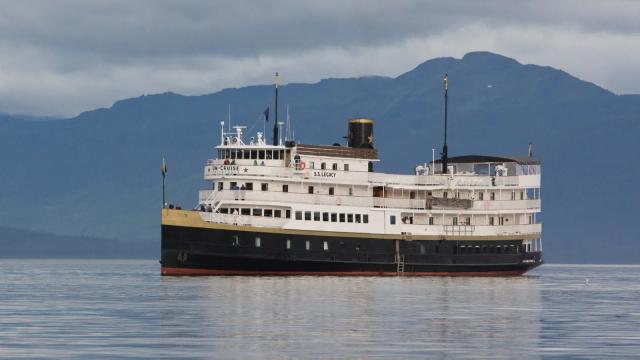
Paneluxe cabinetry is already at sea aboard UnCruise Adventures' Wilderness Legacy. If you are planning a new build or refit, contact the Paneluxe team to discuss marine cabinetry for your vessel.